
The Most Important Dollar Coins in the U.S. History
Dollar coins sit at the core of U.S. monetary history. Long before paper notes dominated daily commerce, silver dollars represented national credibility, trade power, and political identity. Each major design shift reflects a specific moment when the country redefined its economic direction.
Unlike cents or nickels, dollar coins were never casual change. They were statements. Finding out what dollar coins are worth money brings us closer to understanding the key epochs of the United States.

Why Dollar Coins Matter More Than Other Denominations
From the start, the dollar carried symbolic weight. It was meant to rival European silver crowns and anchor the young nation’s financial system.
Dollar coins mattered because they:
Defined official U.S. monetary standards
Enabled international trade
Reflected political and cultural priorities
Served as diplomatic tools and prestige gifts
Many were produced in limited numbers, not due to collector intent, but because demand, technology, or politics restricted output.
The First True American Dollar: 1794 Flowing Hair
The 1794 Flowing Hair Silver Dollar represents the birth of U.S. coinage authority. Struck shortly after the establishment of the U.S. Mint, it tested the nation’s ability to produce reliable silver currency.
Key characteristics:
Lady Liberty with flowing hair on the obverse
Small eagle on the reverse
Early minting technology and hand-adjusted planchets
Only a tiny number were struck successfully. Survivors are few, and condition rarity drives values into the multi-million-dollar range. More importantly, this coin established trust in American silver at a time when confidence was fragile.
Scarcity by Design: The 1804 Draped Bust Dollar
Often called the “King of American Coins,” the 1804 Draped Bust Dollar is famous not for circulation, but for diplomacy.
Although dated 1804, these coins were struck decades later as presentation pieces for foreign dignitaries. Their intentional rarity transformed them into legends — read more of them in the best coin identifier app.
Why it stands apart:
Fewer than 15 confirmed examples
Never intended for public use
Represents coinage as political instrument
Its status shows how dollar coins moved beyond commerce into statecraft.
Trade Dollars and Global Ambition
By the late 19th century, the U.S. sought to compete in Asian trade markets dominated by Mexican silver. This led to the Trade Dollar, heavier than standard dollars and tailored for overseas acceptance.
Notable examples include:
1873-CC Trade Dollar, struck at Carson City
1885 Trade Dollar, proof-only and never circulated
These coins reflect America’s expanding global reach—and the limits of that ambition once domestic acceptance failed.
From Utility to Icon
As the century turned, dollar coins shifted from trade tools to cultural markers. Designs became bolder, messages clearer, and mintages more controlled.
This transition sets the stage for the Morgan and Peace dollars, which dominate collector consciousness today and are easily found via the free coin app.
The most important dollar coins are not simply rare. They exist at moments when the U.S. defined itself—economically, politically, and culturally. Understanding that context explains why these coins still command attention and extraordinary value.
Silver Icons That Defined an Era: Morgan and Peace Dollars
If early dollars established credibility, Morgan and Peace dollars carried American identity into everyday life. These coins circulated widely, survived economic shocks, and became the backbone of U.S. silver-dollar collecting.
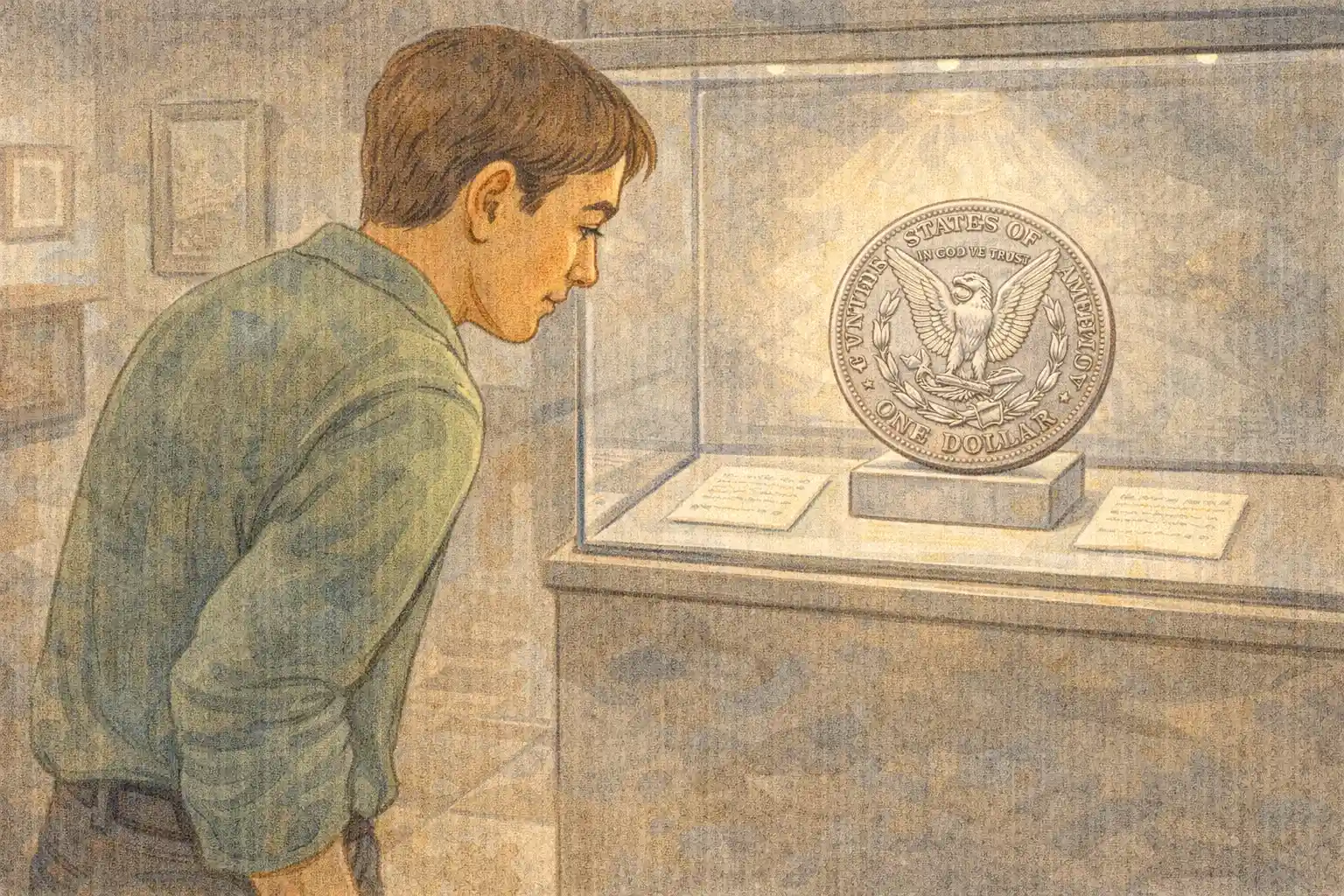
The Morgan Dollar: Power, Industry, Expansion
Introduced in 1878, the Morgan Dollar arrived during rapid industrial growth. Its bold Liberty portrait and heraldic eagle mirrored a confident nation expanding westward and consolidating economic power.
Why Morgans matter:
Struck in massive quantities, yet key dates are genuinely scarce
Minted at multiple facilities, including Carson City
Anchored by 90% silver content, linking value to metal and rarity
The standout is the 1893-S Morgan Dollar. With just 100,000 struck during a severe economic downturn, it became the series’ most sought-after circulation issue. Even well-worn examples command strong prices; high-grade survivors cross six figures.
Another anomaly is the 1895 Morgan Dollar. No business strikes were released—only proofs—making it one of the few U.S. coins where absence defines rarity.
Carson City: Romance and Scarcity
Morgan Dollars from Carson City (CC) held a special appeal. Struck near western silver mines, they symbolize frontier economics.
Collectors prize them for:
Low mintage
Distinctive mint mark
Association with western silver booms
Many CC Morgans were later melted, shrinking survival rates and amplifying demand.
The Peace Dollar: A New Message After War
The Peace Dollar, introduced in 1921, marked a dramatic shift in tone. After World War I, the design celebrated peace rather than power.
Defining features:
Youthful Liberty wearing a radiant crown
Eagle at rest, clutching an olive branch
Inscription of “PEACE,” unique among U.S. coins
The 1921 High Relief Peace Dollar stands apart. Struck using deeper dies, it offered stunning detail but proved impractical for mass production. Its limited output and artistic quality push top examples well into six figures.
From Circulation to Collectibility
Morgan and Peace dollars bridged two worlds:
Everyday commerce
Enduring symbolism
They were saved, hoarded, melted, and rediscovered. This complex survival history fuels today’s market.
Key reasons collectors still focus here:
Clear rarity tier
Transparent pricing by grade
Strong demand across generations
A Brief Comparison
Dollar Type | Era | Why It Matters |
Morgan Dollar | 1878–1921 | Industrial strength, silver policy |
Peace Dollar | 1921–1935 | Post-war optimism, artistic shift |
1893-S Morgan | 1893 | Lowest mintage circulation key |
1921 Peace (HR) | 1921 | High relief rarity |
Morgan and Peace dollars transformed the U.S. dollar from a state symbol into a national icon. Their mix of circulation history, silver value, and defined rarities makes them central to any discussion of important dollar coins.
Modern Dollar Milestones and Their Lasting Impact
By the mid-20th century, the role of the dollar coin had changed. Paper currency dominated daily use, and silver dollars faded from circulation. Yet the dollar coin never disappeared. Instead, it evolved into a vehicle for commemoration, national pride, and modern experimentation.
Eisenhower Dollars: Bridging the Past and Space Age
The Eisenhower Dollar (1971–1978) revived the denomination after the end of the Peace Dollar era. It honored a World War II general and president while celebrating the Apollo moon landing on the reverse.
Why Eisenhower dollars matter:
First circulating dollar after silver’s removal from coinage
Dual symbolism: military leadership and space exploration
Issued in both clad and 40% silver collector versions
High-grade silver proofs and rare varieties remain strong performers, with top examples reaching five figures.
Sacagawea Dollars: Representation and Experimentation
Introduced in 2000, the Sacagawea Dollar broke with tradition. It featured a Native American woman and used a golden-colored alloy for distinction.
Its importance goes beyond design:
First widely circulating modern dollar honoring a Native American woman
Tested new alloys and striking processes
Produced some of the most famous modern errors
The 2000-P “Cheerios” Sacagawea variety, identified by enhanced tail feathers on the eagle, transformed a promotional coin into a major collectible. Certified examples now command prices that rival classic silver dollars.
Presidential and Native American Dollars
Later programs expanded the educational role of dollar coins.
Presidential Dollars (2007–2016) honored past presidents and introduced edge lettering, a process that created notable error coins.
Native American Dollars (2009–present) rotate reverse designs annually, highlighting Indigenous contributions to U.S. history.
While most trade near face value, low mintages, top-grade examples, and major errors have built a following among modern specialists.
A Broader Definition of “Important”
Not every important dollar coin is rare. Some matter because they:
Mark cultural change
Reflect political priorities
Introduce new technology
Expand historical representation
Modern dollars may not yet match early silver icons in price, but they document how the nation chooses to tell its story.
Preservation and Verification Matter
As values rise, so does the need for authentication. Professional grading and careful documentation protect both historical and financial significance. Digital tools such as Coin ID Scanner help collectors identify, catalog, and compare dollar coins against verified specifications, reducing mistakes and preserving long-term value.
The most important dollar coins in U.S. history form a continuous narrative—from fragile early silver experiments to modern symbols of inclusion and innovation. Each era reshaped the meaning of the dollar.
Some coins matter because they are rare. Others matter because they represent who the nation was—or aspired to be—at a specific moment in time. That combination is what makes U.S. dollar coins enduring milestones rather than relics.